
For many people living with diabetes, developing a cataract is a common milestone. While the surgical procedure itself is highly successful, diabetes introduces specific considerations that require a tailored approach. Whether you are in Manchester, Stockport, or the wider North West, understanding how your health impacts your eyes is essential for a smooth recovery.
The Connection Between Diabetes and Cataracts
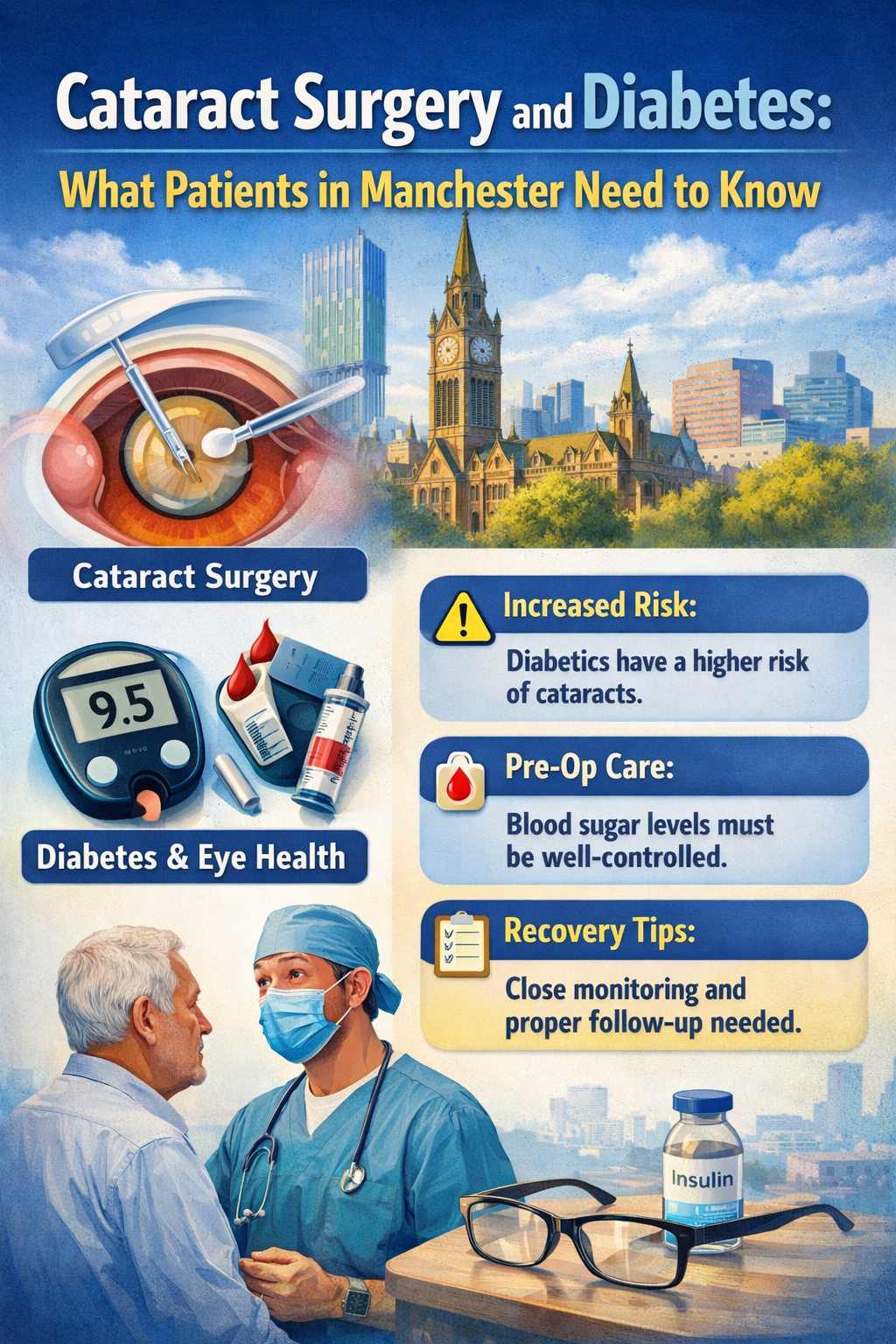
Diabetes can accelerate the natural aging of the lens in the eye. High blood sugar levels can lead to changes in the lens’s structure, often causing cataracts to develop at an earlier age or progress more rapidly than in those without the condition.
When considering surgery, the primary goal is not just to clear the “cloudy” vision, but to ensure the delicate blood vessels in the retina remain stable.
Key Considerations Before Your Procedure
1. Retinal Health and Diabetic Retinopathy
Before any operation, a thorough assessment of the retina is vital. For patients with diabetic retinopathy, cataract surgery can occasionally trigger a progression of retinal changes.
-
The Strategy: I perform a detailed OCT scan of the macula (the central part of the retina) to ensure there is no hidden swelling or leakage. If retinopathy is active, it may sometimes be necessary to stabilize the retina before proceeding with lens replacement.
2. Managing Post-Operative Swelling (CME)
Diabetic patients have a slightly higher risk of developing Cystoid Macular Oedema (CME)—which is swelling in the central retina—after surgery.
-
Prevention: To counter this, I often prescribe a more robust course of anti-inflammatory drops, sometimes combining steroids with non-steroidal (NSAID) drops. This proactive step significantly reduces the risk of blurred vision during the healing phase.
3. Selecting the Best Intraocular Lens (IOL)
Lens choice is particularly important if you have a history of diabetic eye disease.
-
The Choice: While multifocal lenses offer the promise of life without glasses, they may not be the ideal choice for everyone with diabetes, especially if there is significant retinal damage. I work closely with each patient to select a lens—often a high-quality Monofocal or EDOF lens—that provides the best possible contrast and clarity of vision.
Preparation and Recovery in the North West
I believe that a successful outcome starts with clear communication between your surgical team and your primary care providers.
-
Blood Sugar Stability: While current NHS guidelines (GIRFT) don’t always require a specific HbA1c level to proceed, having stable blood sugar in the weeks leading up to surgery supports faster wound healing and reduces the risk of post-operative infection.
-
Specialized Monitoring: Recovery for diabetic patients may involve a few extra check-ups. These visits are a precautionary measure to ensure that your vision is settling exactly as intended.
Frequently Asked Questions
-
Is cataract surgery safe if my blood sugar is high? Generally, yes, but stability is better. I assess each patient individually; if you are feeling unwell due to your sugar levels, we may pause to ensure your safety.
-
Will surgery improve my diabetic retinopathy? No, cataract surgery only treats the lens. However, by clearing the cataract, it becomes much easier for your ophthalmologist to monitor and treat your retina in the future.